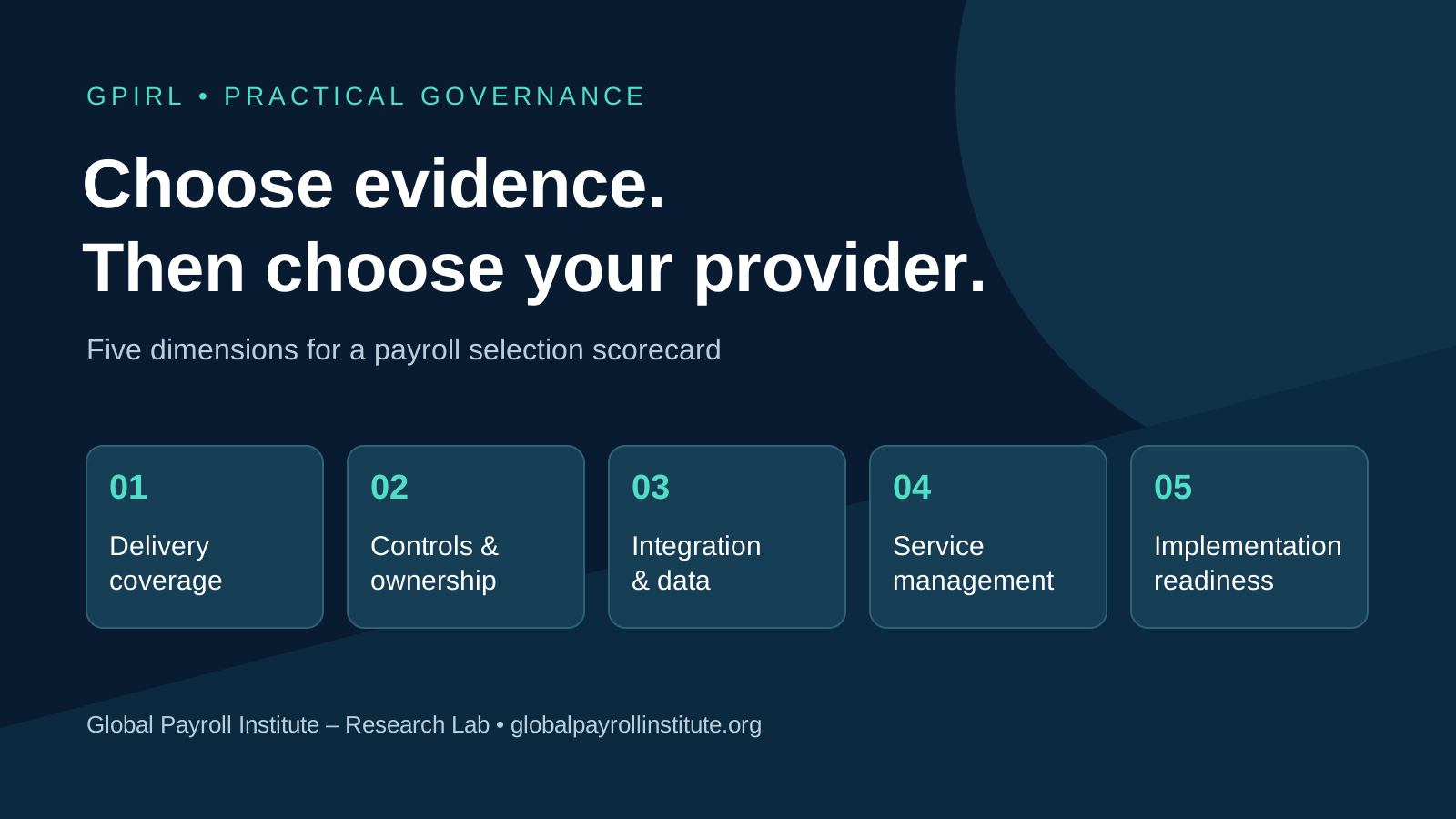
Start with decisions, not vendor demos
A payroll provider selection exercise should make the operating model easier to understand. Before comparing platforms or prices, define the countries, employing entities, workforce groups and responsibilities in scope. A proposal can look comprehensive while leaving important handoffs with the buyer.
For organisations expanding from the United States or Canada into Europe, or coordinating operations involving Italy, India, China and other growth markets, the same global scorecard can organise the evaluation. The evidence behind each score must still be country-specific.
Build five evidence categories
1. Delivery coverage. Ask which activities are delivered directly, which depend on partners and who is accountable for each country. Separate payroll calculation, filings, payments, employee queries and local advisory. Record exclusions instead of assuming they are included.
2. Controls and accountability. Request a sample responsibility matrix, approval workflow, exception log and escalation process. Check who investigates incorrect input, a rejected payment or an unresolved reconciliation. Evidence should show how the service operates, not just that a policy exists.
3. Integration and data. Map the source of employee changes, the agreed input format, validation rules and acceptance confirmation. Ask how rejected records return to the originating team. Include access controls, retention and data-transfer arrangements in the review with the appropriate specialists.
4. Service management. Compare the proposed service calendar, named roles, reporting and incident handling. Define what each service-level measure actually counts. A response-time target is different from a resolution commitment.
5. Implementation readiness. Request the migration plan, dependency list, testing approach and exit criteria. Clarify who prepares historical data, validates opening balances and approves the transition. Include an exit and continuity plan before signing.
Use a transparent scoring method
An illustrative internal scale is 0 for no evidence, 1 for an unsupported assertion, 2 for partial evidence and 3 for evidence validated against your requirements. This is a working tool, not an industry certification. Agree weights with HR, Finance, Payroll, Procurement and relevant control owners before reviewing bids.
Keep mandatory requirements separate from weighted preferences. A strong overall score should not hide a critical gap in a required country or process. Add columns for the evidence reference, reviewer, unresolved question and proposed contract treatment.
Run one realistic scenario
Give shortlisted providers the same scenario: a late employee change arrives after the normal cut-off, affects payroll and must be reflected in finance reporting. Ask each provider to walk through the decisions, approvals, communications and evidence retained. Use synthetic information rather than employee records.
Compare the responses with the written proposal. Where the demonstration and contract differ, resolve the difference before selection. Document assumptions and assign an owner to every open point.
A useful output for leadership
The final recommendation should explain the preferred option, material trade-offs, implementation dependencies and residual risks. Include the scorecard and decision log so that leadership can understand why the choice fits the operating model.
Global Payroll Institute – Research Lab provides independent research and advisory on payroll governance. Explore our provider selection advisory and transformation assurance services. To discuss an evaluation, contact info@globalpayrollinstitute.org.
This guide proposes an operational evaluation framework. Country-specific tax, employment and data-protection requirements require separate verification for the relevant jurisdictions.